
How can Japan’s GPIF fulfil government demands?
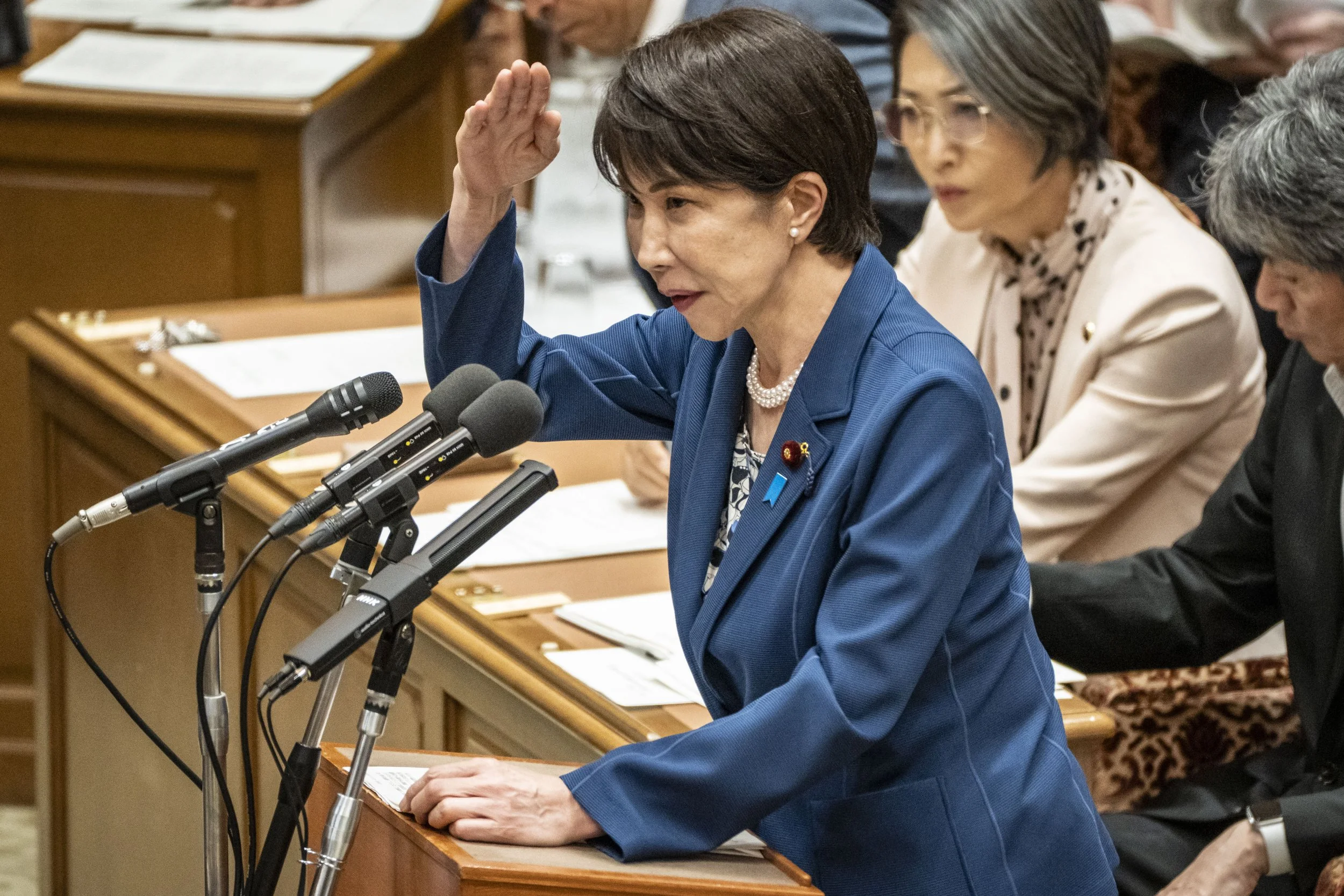
Following her landslide election victory earlier this year, Japan’s prime minister Sanae Takaichi views the $1.8tn Government Pension Investment Fund as a tool to get the country’s economy moving by investing domestically (Yuichi Yamazaki/AFP via Getty Images)
Japanese prime minister Sanae Takaichi won a landslide election earlier this year promising to mend Japan’s economy which has been hit by inflation and stagnant wages.
What has this got to do with pension funds?
Well, last month she stressed the importance of Japan’s asset owners investing in the national economy so that “the public can share in the fruits of Japan’s economic growth”.
In making these comments, she mentioned by name the country's most influential $1.8tn asset owner, the Government Pension Investment Fund.
The comment comes as Takaichi’s government aims to shift Japan's economy toward a new growth-oriented model, while some believe the government wants to stem further declines after the yen hit a historic low.
By law GPIF must not use reserve assets to influence financial markets or implement economic policy and must invest solely for the benefit of its members over a long-term horizon. So how can it respond to the government's call?
GPIF currently targets a 25 per cent allocation to domestic and foreign bonds and equities.
Koji Okuda, chief researcher at Daiichi Life Research Institute, says GPIF has three potential options to comply with the government's call within its existing framework.
The most flexible option, Okuda says, is to make greater use of its deviation tolerance range, which allows a ±6 percentage-point band around that 25 per cent target. In theory this could translate into an additional domestic allocation of up to roughly $194bn.
It requires no change to the policy portfolio and could theoretically be implemented immediately.
But Okuda cautions that the range was designed to accommodate short-term market fluctuations not sustain a permanent domestic tilt, and that GPIF has historically made limited use of this flexibility.
Indeed GPIF’s CIO Yusuke Yoshizawa said in the fund’s latest annual report that it will continue to refine and improve its rebalancing approach to keep its allocation close to its strategic targets, even as growing AUM and market volatility make balancing risk and cost increasingly difficult to manage.
A more permanent option is to review its asset allocation target. This is the only way to permanently raise the domestic asset ratio, and the one offering the greatest potential impact of the three, says Okuda.
Nevertheless this is easier said than done. It requires board and ministerial approval and any new allocation would still be needed to satisfy GPIF's required return and risk conditions.
In fact, GPIF just last year decided to keep its current target weight for another five years, until March 2030.
The third option is an increased allocation to domestic alternatives such as private equity. Okuda says the domestic deals must still meet GPIF's required conditions on profitability, risk management, and transparent reporting standards.
Based on AOX research this may be the most realistic of the three options and is closely aligned with GPIF's current diversification effort.
Under its five-year management plan, GPIF is targeting up to 5 per cent allocation to alternatives, which it houses within bond and equity exposures based on risk-return profile.
According to the fund’s annual report, the alternatives allocation stood at 1.74 per cent as of March 2026. This leaves roughly $63.5bn to be invested before reaching the target.
Not all of this would necessarily go toward domestic assets (though if it was, it would have to be allocated towards alternatives obviously) but there remains significant room for domestic investment, given that GPIF's alternatives exposure remains largely concentrated in offshore markets such as the US and Europe.
Of GPIF’s infrastructure allocation, 4 per cent is currently domestic while of its private equity allocation, 5 per cent is domestic. Real estate skews more heavily towards Japan with 20 per cent of this exposure being domestic.
Since 2022 GPIF has been gradually expanding its direct fund allocation, alongside its core fund-of-funds strategy. Through this approach, the fund recently started investing in domestic-dedicated single funds.
Last September, it committed $272mn to an infrastructure fund managed by DigitalBridge Group. GPIF also recently committed $63mn each to value-add real estate funds managed by Morgan Stanley Real Estate Investing and Phoenix Property Investors, along with a $97mn) investment in a similar fund managed by BentallGreenOak.
Just last month the fund made its first domestic buyout investment of $123mn in a fund run by Advantage Partners.
A GPIF spokesperson tells AOX that its investment management must be conducted, by law, solely in the interest of members, from a long-term perspective, while giving due consideration to its impact on the market and other private-sector activities.
“With that in mind, we do not believe that the current investment environment deviates significantly from what our policy portfolio assumes. That said, we review the policy portfolio appropriately and in a timely manner each fiscal year from an expert standpoint, and will proceed with considering a review going forward, should the need arise.”