
What even is the UK’s National Wealth Fund?
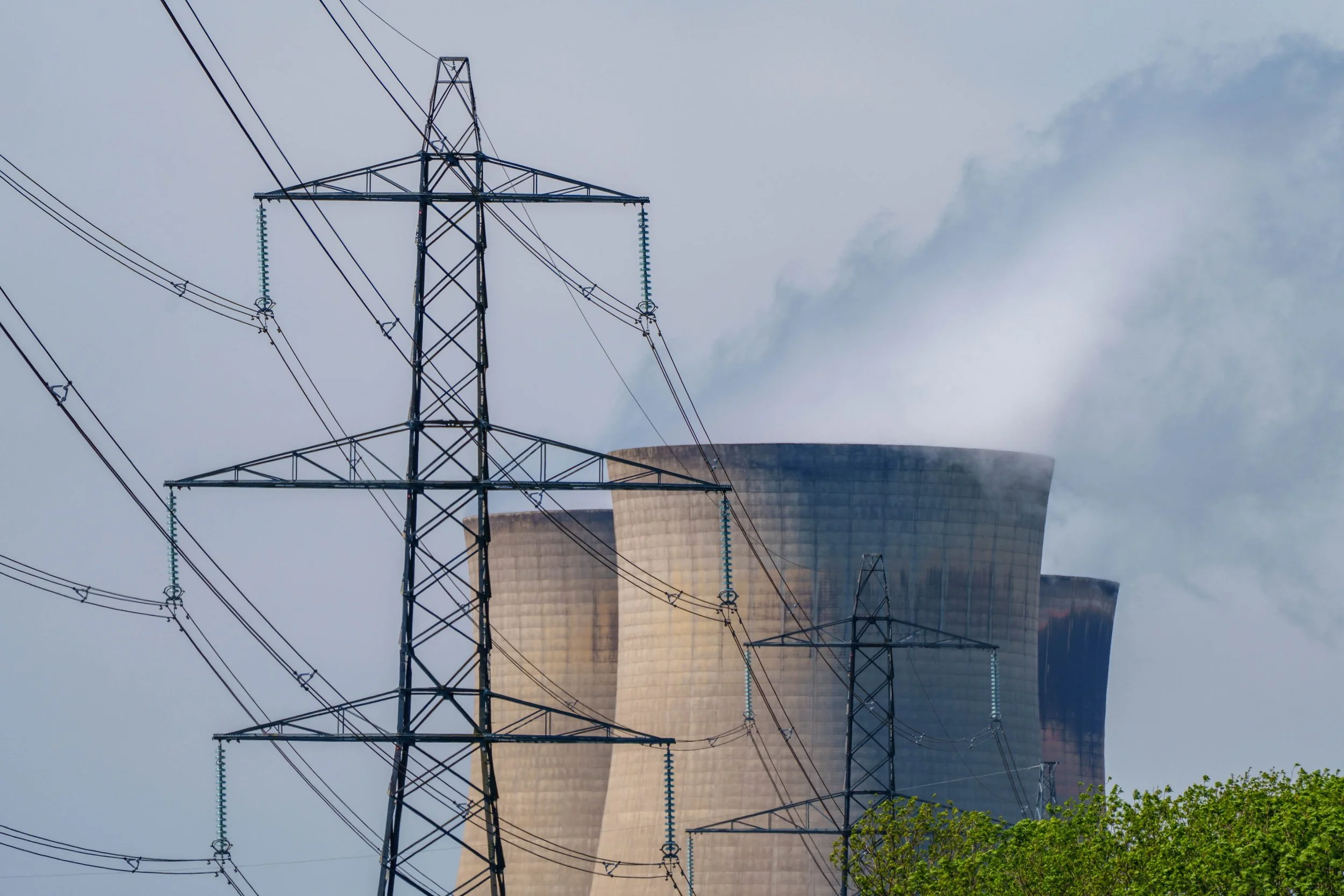
The UK’s National Wealth Fund is trying to ‘crowd in’ investment into areas which the market might otherwise ignore. But why are no UK pensions taking it up on the offer? And what even is the fund? (Dominic Lipinski/Bloomberg)
The UK’s $37bn National Wealth Fund is perhaps one of the most misleadingly named of Britain’s government entities.
Despite its name it is not a sovereign wealth fund - the UK still remains without such a vehicle.
Its job is to help grow the British economy by crowding in investment from asset owners such as pension funds into areas where the market is failing to encourage it.
But in the 18 months it has been up and running, the appetite from UK pension funds for joining in its investments has been low.
So what is the National Wealth Fund actually doing?
Is it a sovereign wealth fund? Is it a plane? No its a policy bank
Rising from the ashes of the UK Infrastructure Bank, which was set up in 2021, the National Wealth Fund is a “policy bank” whose aim is to bring together the public and private sectors with the ultimate aim of “unlocking the UK’s future”.
The investments focus on supporting British infrastructure but on a granular level it deploys debt and equity investments in companies or projects which support critical infrastructure.
The fund has been given a triple bottom line of supporting the government’s growth and clean energy missions and crowding in private capital, while also generating a return for the taxpayer.
When asked what a return for the taxpayer really means, a spokesperson for the NWF said: “We’re referring to a financial return. We’ve always been very clear that we intend to turn a profit for the taxpayer at portfolio level in the long term … But to be clear: we also invest to bring benefits to society more widely.”
This includes job creation and abating carbon emissions.
Well the fund lost £152.2mn before tax, equating to -14.2 per cent in adjusted return on equity terms, in the 2024-25 financial year. The previous year it lost £85.6mn, equal to -10.7 per cent.
The NWF spokesperson said “achieving a positive financial return will always take time” with the expectation of profitability by 2030-31.
But the fund admitted its most recent losses were “higher than budgeted” due to challenges in digital infrastructure, a sector where it holds high concentration.
Last year the Treasury Select Committee acknowledged some of the NWF’s investments “will fail” and some of its investments will lose value.
“This, in itself, cannot be a cause of criticism of the NWF, because it should have a higher risk appetite,” the TSC report states.
Risk appetite
In fact in its five year strategic plan chief executive Oliver Holbourn said the NWF would lean into the sectors and larger investments where it can “make a real difference”, highlighting energy storage and nuclear energy.
As part of this next stage the NWF will have a “higher financial risk appetite than a typical commercial financier” across its private investments, with the “capacity to take up to five times more risk than commercial banks”.
“The NWF operates on a commercial return-seeking basis, but with a public policy mandate,” the spokesperson told AOX, adding “this means we inevitably expect to make some losses on some of our investments … to do otherwise would suggest we aren’t taking enough risk to deliver our mission”.
Ian Brown, chief investment officer at the NWF, said: “A huge portion of the investments we made are sub-investment grade, very deliberately. If you're a conventional bank or a pension fund most of your assets are going to be investment grade”.
A big part of the NWF is to bring private capital into its deals, “our higher risk appetite is designed to enable, not hinder, deal equilibrium by filling gaps rather than competing with commercial investors,” the NWF spokesperson said.
This is ultimately the balance the NWF is trying to strike: it is trying to deliver a return to its investors (the British taxpayer) but invest in areas that the market hasn’t so far expressed any interest in touching but which are also deemed to be in the UK’s national interest.
And at the same time it is trying to crowd private, even more commercially-minded investors, into these areas.
But the last bit of that equation has been a bit hit and miss - certainly as far as UK investors go.
Crowding in UK investors
Brown said: “In everything we do we would like to have other investors alongside us. If we can, it doesn't always work but if we can we would.”
He said the NWF was neutral as to whether the investors it worked with were British or not.
Which is just as well because despite the fact the British government is very actively encouraging UK pension funds to invest in UK private equity, domestic interest has been very low so far.
He said that “no one from the UK rang us up and said… ‘Next time you are doing one of these [deals] let us know and we’d like to do it’... So there's something there about risk appetite, perhaps, between the UK pension funds and the Aussie pension funds.”
One insider at a UK pension fund told AOX they had held “active discussions” with the NWF about investing.
But they said: “One of the issues for us is that the NWF is deemed public capital by HM Treasury and they have a rule that public capital can only be 30 per cent of UK schemes.
“So for any potential joint projects with NWF, there is a requirement for 70 per cent of the capital to come from private sources which, as you will understand, can be a limiting factor for a number of reasons including small and large size.”
They told AOX they had made representations to the Treasury about this but “to no avail”.
The NWF has sourced £18bn in private finance as part of 78 deals, alongside investors such as Aware Super, Aviva and Rothesay.
Following a £500mn with Australia’s Aware Super and investment manager Equitix, the NWF invested £200mn to battery storage platform Eelpower Energy.
Brown said the ticket sizes it requires are around £100mn, and he theorised that UK pensions may not have been at scale to do direct infrastructure deals.
Yet the tide might be turning, as consolidation and scale are being brought to both the Local Government Pension Scheme and defined contribution markets.
So far the NWF is certainly attracting investment into UK infrastructure from some investors. But its ability to generate a return - whether for investors or the UK economy - is so far unproven.
By the nature of its investments this may take a while. But whether UK investors have the patience to wait for a track record - or take part without one - remains to be seen, particularly when there are plenty of other infrastructure investment managers out there.