
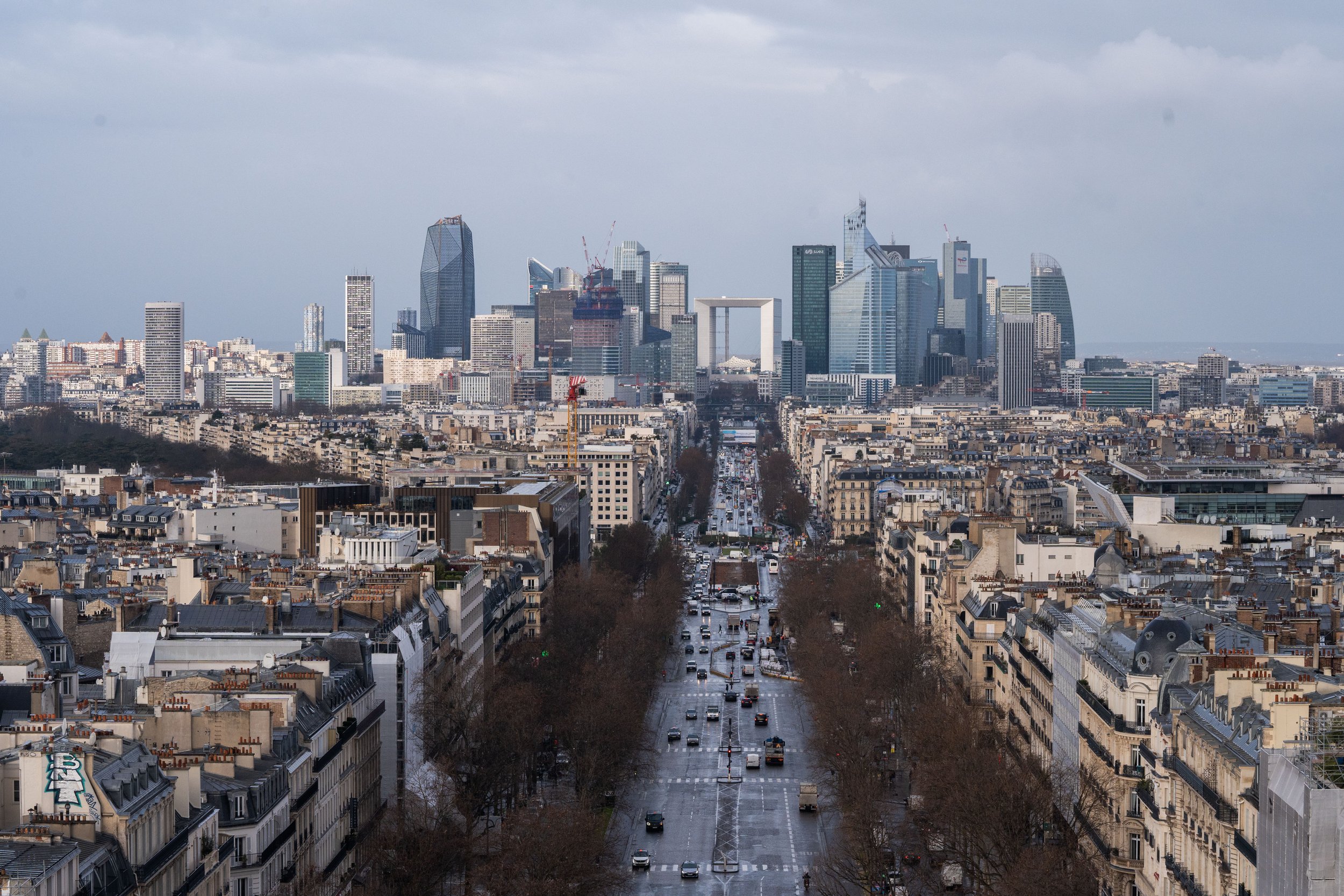
The French government is putting pressure on the country’s pension schemes to increase their private asset allocations (Nathan Laine/Bloomberg)
Greater allocations to private markets following legislative pressure could see up to $45bn of inflows into unlisted assets by France’s defined contribution pension vehicles, including through French PER funds and European long-term investment funds.
The French government is putting pressure on the country’s pension schemes to increase their private asset allocations, says Boutros Thiery, Mercer's head of investments in France.
France's green industry law (Loi Industrie Verte), enacted at the end of 2023, has compelled pension schemes to have minimum target allocations to private assets. Depending on how far away savers are from retirement, the law permits savers' portfolio allocations of unlisted assets of between 6-15 per cent.
"On average, it means that in full lifecycle products, you will add 7-8 per cent of private markets," Thiery tells MandateWire Analysis.
As funds get to grips with these targets, the pensions industry now expects a $34bn-$45bn opportunity in private asset uptake in the coming years, with pension funds now boosting allocations into open-ended funds to meet targets for unlisted asset investment.
Thiery explains: "Everybody has to comply with this rule and in a short period of time, and it's quite complex; you need innovation [and] complex engineering. So it's also reshuffling the cards with respect to the providers that were in place before the law was issued."
A raft of other legislative changes – including France's PACTE business reforms, which paved the way for more flexible Produit d'Epargne Retraite funds for the occupational retirement market – have also boosted private asset allocations.
In research published at the end of last year, JPMorgan found that PERs have allowed occupational funds to "allocate capital with more flexibility to private equity, infrastructure, and credit", allowing for greater returns and portfolio diversification.
It added that PERs were "increasingly benefitting from their ability to invest in the European Long-term Investment Fund regime", following passage of Eltif 2.0 legislation in 2024.
Similar to the UK's long-term asset funds, Eltifs provide an open-ended structure allowing for the construction of multi-asset portfolios.
Figures from JPMorgan and rating agency Scope Group reveal France was already the largest market in Europe for Eltif investments by the end of 2024, with $8.3bn committed, compared with $4bn in Italy and $3bn in Germany.
Eltifs are growing more broadly in Europe, with the Alternative Investment Management Association, a global industry trade body, estimating that inflows into the structure could reach $111bn by 2028, up from $12bn in 2022.
The uptake of private assets through evergreen funds more broadly is increasing at pace.
State Street Investment Management found in a summer 2025 survey that more than half of French investment management professionals (55 per cent) say the growth of evergreens "will be an important factor in opening up private markets to defined-contribution investors".
It added that more than half of institutional investors in the country are growing their private equity allocations "because of concerns about poor returns in public markets".
Pressure to invest in private markets has also fallen on French public sector pension plans.
In a similar vein to the UK's Mansion House Accord, France's FRR reserve fund (Fonds de Réserve pour les Retraites) announced in 2020 it would double its allocations to private equity assets, up to 5 per cent of its portfolio.
In July, AOX sister title MandateWire reported that FRR would launch a €500mn unlisted assets programme, targeting allocations to private debt, private equity and infrastructure in France and Europe over the coming years.
France also allowed its $53bn Etablissement de Retraite Additionnelle de la Fonction Publique civil service pension fund to raise its unlisted asset allocations to 45 per cent, up from 40 per cent, following passage of a law in 2019.
Growing allocations from low levels
In spite of the strong uptake of Eltifs, Thiery says French exposure to illiquid assets is low compared with UK and US counterparts, although defined benefit plans have traditionally held significant allocations to real estate.
Indeed, some French pension funds tracked by MandateWire recently show higher allocations towards real estate than other types of private assets.
At the end of 2024, the $1.5bn IRCEC Caisse nationale de retraite complémentaire implemented a 7.1 per cent allocation to property, but only a 2 per cent weighting to private debt and 1.9 per cent to private equity.
However, the $2.7bn Sacra scheme had built up a 9.1 per cent exposure to private equity by the end of 2025, along with a 4.9 per cent weighting to property.
Recently, France's DB schemes have made greater efforts to build out private equity and private debt allocations, Thiery says.
The pipeline of suitable private company investments has grown through France's Tibi initiative, launched by the country's finance ministry in 2020 to encourage greater institutional participation from private pension funds and insurers in the venture capital and early-stage investment market.
Tibi has now entered its third stage, with an additional $14.5bn investment committed in June by investors including the insurance company Carac and railway provider SNCF.
Following the third phase, more than $34bn will be committed to support French and European technology business growth by 2030.
Liquidity considerations
Following the introduction of the green industry law, demand is growing for dynamic products with 10-12 per cent allocations to unlisted assets, which decrease as savers get closer to retirement.
For employees with around five years to retirement, unlisted asset allocations would be closer to 1-2 per cent, Thiery says, with consultants advising occupational pension plans on their liquidity management when making Eltif fund allocations.
Larger employers have sought consultants' advice to build out their own full lifecycle investment products with an average allocation to unlisted assets of 7-8 per cent, he adds.