
Are Australia’s pension funds stuck in a performance testing loop?
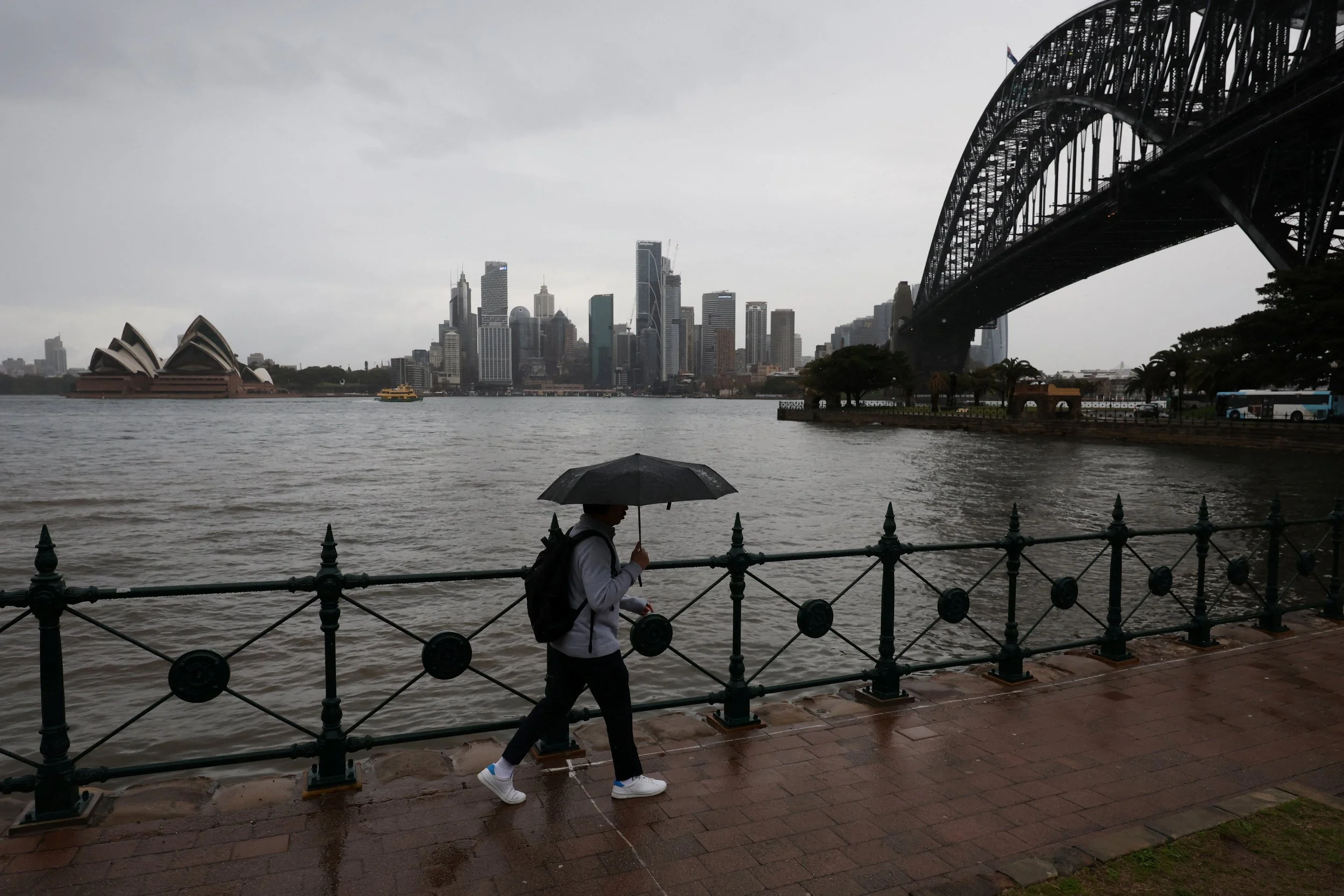
Australia’s pension system has managed to weed out underperforming funds and consolidated its system around fewer, higher-performing MySuper products - but has it found itself stuck in a loop it can’t escape? (Hollie Adams/Reuters)
Every August the Australian Prudential Regulation Authority publishes the results of the superannuation fund performance test. Launched in 2021 as part of the government’s Your Future, Your Super reforms, the test aims to tackle persistent underperformance.
This year, one of the 50 MySuper products assessed failed: the Building Unions Superannuation Scheme Queensland’s $4.6bn MySuper product, which missed by just two basis points.
MySuper products are the low-cost default products that members are placed into if they do not actively choose an investment option. They were introduced in 2013 under the government’s Stronger Super reforms. As of June 30, $940bn of the $3.4tn super system was in MySuper products. Thirteen MySupers failed in 2021, five in 2022, and one in 2023. Zero failed in 2024 and 2025.
The consequences of a failure can be existential. BUSSQ must write a letter to its members and inform them. If it fails for a second consecutive year, it will be prohibited from accepting new members until it passes again.
David Bell, executive director of the Conexus Institute think tank who has published extensive research on YFYS, tells AOX the damage goes beyond just a letter.
“Imagine being a director of a fund that’s on the front page of the financial newspapers for failing the test…it also affects the ability of those funds to attract the best investment staff, because they’re going to say, is this fund going to be able to survive? Do I want to be associated with it?” he says.
Under Australia’s choice of fund rules, members can also initiate a switch to another fund in a few clicks, without waiting for the regulator to act.
Beating a passive version of yourself
APRA replicates each product’s strategic asset allocation using a set of indices chosen by the Australian Treasury, so a product is measured against a passive version of itself, not against its peers.

David Bell of the Conexus Institute and former chief investment officer at Mine Super says the ‘Your Future, Your Super’ test has achieved much of what it set out to
Each product is scored over a rolling 10 years, with administration fees included in the final number. If a product trails its benchmark by more than half a percentage point a year, it fails.
On its own terms the test has been a success. Margaret Cole, Apra’s then-deputy chair said last year that the number of member accounts in products that did not pass fell from one million to 8,500 since the test was introduced - though BUSSQ’s failure will add about another 66,000 to that figure.
Meanwhile the number of MySuper products has shrunk from 80 to 51 in that time due to a combination of organic consolidation in the industry and fallout from the test. Of the 15 products that have failed since 2021, 12 have merged into other funds, one has closed and rebranded, and one has survived. The fate of the 15th, BUSSQ, remains undecided.
Bell, who was chief investment officer at Mine Super until 2019, says the test has also brought an uplift in data for Apra.
“There was large dispersion in performance and fees, and since that test has come in… all those things have been addressed. Reporting to the regulator is really good, so they have the data they need,” he says.
Unintended consequences
The industry has adapted quickly to the test, mostly by taking less risk against the benchmarks.
This has been seen most clearly in equities, where funds have moved en masse to passive and enhanced passive exposures.
“The pathway for a lot of funds has been to go passive, and then from there they’ve gone a little bit more along the enhanced path…It’s hard to take significant tracking error now without making major sector bets, and this may not be the environment for them,” Bell says.
Funds have told AOX that they are more willing to take benchmark risk in private markets, which are harder to index. For example, funds have been investing more in value-add infrastructure to beat what is a more core-style benchmark.
“As you get into the details, the benchmarks start to struggle to keep up… There’s so many areas, nearly within every asset class. Early on the sentiment was, well, let’s just add another benchmark. But ultimately you could end up with 80 benchmarks, and that would be totally unworkable,” Bell says.
A lesson for other countries
Australia’s latest results are timely because consultation on the UK’s value for money framework closes on September 15.
Under the proposed framework, workplace defined contribution defaults will be assessed against their peers and given a public rating: red, amber, light green or dark green. Red means being closed to new business, with consolidation expected to follow.
Bell, who has already spoken to UK regulators and government departments about the framework and had his work cited in consultation papers, has told them all the same thing.
“One message we’ve always given to the UK as we’ve been looking at the framework is to incorporate a sunset clause. That just means that at some point in the future the policy is paused before it’s re-entered, or a different pathway is taken,” he says.
Bell’s reasoning is simple. The majority of the benefits of the super fund test —such as lower fees, better data for APRA, and fewer underperformers — have already been delivered. But now Australia is stuck with the test for political reasons and maintaining it in its current form comes with costs – such as herding around the benchmarks, shorter investment horizons, and a narrower set of investable assets.
“In Australia it’s so difficult now to get rid of the performance test, even if you feel like it has done its duties… The wedge politics of this day and age is such that no minister wants to be the one that reduces consumer protections,” he says.
In addition to a sunset clause, UK regulators should also look at creating something that is “multi-metric”, Bell says.
“Any one metric is flawed. [The UK should] come up with a few good metrics, put in place a sunset clause and then after five years really revisit the test and see whether they need it to go forward,” he says.
Australia has also just completed its own consultation process that included a proposal for new benchmarks that Bell notes would “remove barriers” to investing in areas of national priority. But those are changes to how the test works, rather than a call on whether it continues.
Unlike Australia, the UK should decide how it’ll stop before it starts.