
How does a foundation which supports artists align its portfolio to its mission?

The $114bn Jerome Foundation is eliminating the distinction between its grantmaking dollars and the rest of its investment portfolio, but what does this mean in practice for a foundation which provides grants to support the creation and development of new works by early-career artists?
The Jerome Foundation is moving beyond the idea that only grantmaking dollars need to be mission-aligned - and is increasingly using its investment portfolio to do the same.
Founded in 1964 by the Oscar-winning filmmaker Jerome Hill, the $114mn foundation provides grants to support the creation and development of new works by early-career artists.
Its view on ‘mission-aligned investing’ used to be pretty simple: the foundation had its grantmaking dollars, and then it had the rest of its investment portfolio.
But that distinction is starting to disappear.
Over the past fiscal year the foundation repositioned its portfolio to put more emphasis on directly-owning public companies, while dialing back its reliance on domestic and international equity mutual funds. It also modestly increased its use of ETFs, shifted some fixed income toward government and corporate bonds and, for the first time, carved out a 1 per cent allocation to private equity.
Jerome Foundation president and chief executive Eleanor Savage told AOX the foundation has been rethinking a long-standing assumption in philanthropy: that the 5 per cent of assets it must distribute each year is the “mission money,” while the remaining 95 per cent is simply there to generate returns.
“For decades, Jerome treated the IRS-required 5 per cent payout as the ‘mission money’ for grantmaking and treated the other 95 per cent as neutral capital quietly working in the background,” But, Savage said, added: “Capital is not neutral.”
The portfolio still needs to generate market-rate returns to support the foundation’s grantmaking in perpetuity. But Savage said she wants the investments themselves to reflect the organisation’s work.
Getting closer to what it actually owns
So how on earth does a foundation which aims to support early-career artists reflect that mission in its investment portfolio?
The change is obviously less literal than that – for the moment.
Jerome’s portfolio remains largely built around passive, index-based equities. But instead of relying entirely on mutual funds, the foundation has increasingly moved toward separately managed accounts, where it can own individual stocks directly.
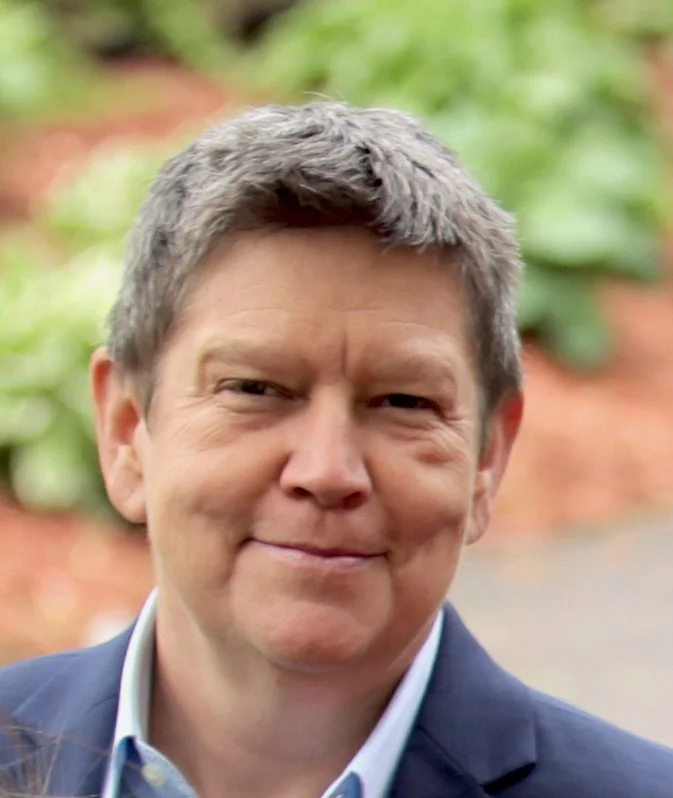
Eleanor Savage, chief executive of the Jerome Foundation, says “capital is not neutral”
That gives Jerome more control over what it owns and what it doesn’t.
The foundation can use those separately managed accounts to exclude companies which don’t meet its priorities and tilt the portfolio toward companies which do.
Around that passive core, Jerome has also added active managers which run more concentrated portfolios and engage with companies through shareholder dialogue and proxy voting.
Its investment policy calls for minimising exposure to companies involved in areas such as animal cruelty, human rights abuses, weapons, tobacco and private prisons, as well as companies ranking poorly on environmental and human rights measures.
The foundation wants to know whether a manager actually has impact goals, whether it can use its position as a shareholder to influence companies and whether it is thinking about who ultimately owns the businesses in its portfolio.
That approach is partly a response to a problem that has become increasingly familiar to institutional investors: ESG labels don’t necessarily tell you much about what you actually own.
“Greenwashing has increasingly become more of a concern among investors and our approach here again comes back to the data and the ongoing due diligence work we do with managers,” said Anna Raginskaya of Morgan Stanley’s Blue Rider Group, who advises the foundation.
Private markets enter the picture
Jerome is also starting to lean further into private markets.
The foundation added its 1 per cent private equity allocation during 2026, while also investing in areas such as affordable housing, the creative economy and specialized private credit.
The idea isn’t to build a giant alternatives portfolio overnight but Jerome is gradually replacing between 5 and 10 per cent of its public market exposure with private investments that can fit within the portfolio’s overall risk and return goals.
“As part of this assessment, we have replaced some public equity and fixed income risk with private investments, but this takes time,” said Lauren Sparrow of Blue Rider Group.
Part of that process has been figuring out where there are opportunities that make sense both financially and from a mission perspective.
Some of those investments are fairly easy to connect to the foundation’s priorities. Public fixed income strategies, for example, may invest in government agency and taxable municipal bonds supporting affordable housing, neighbourhood revitalisation and job creation.
The foundation has also looked at private credit tied to diversified music royalties, providing investors with long-term income streams while connecting the portfolio to the creative economy.
The investment committee has to understand it, too
The philosophy extends to how Jerome makes investment decisions internally.
Savage said the foundation doesn’t see financial expertise and mission expertise as competing qualifications for investment committee members. Instead, it encourages members to ask questions and uses sessions with investment managers to build their understanding of investing.
“We ask the standard performance questions — what’s the benchmark, what’s the fee, what’s the allocation,” Savage said. “But we also push further into how a fund is actually managed: whose labour is embedded in this holding, and does it contradict what we believe?”
That may be the most significant shift at Jerome: mission alignment isn’t being treated as a separate screen applied after the investment decision. It’s becoming part of the decision itself.
Looking ahead, Jerome sees opportunities to continue expanding the universe of market-rate investments that align with its mission, particularly those supporting artists, creative-economy infrastructure and community investment.
As well as music royalties, the foundation already invests in affordable housing for artists.
But Savage said the biggest constraint on going further is not the foundation’s policy, but the availability of investment vehicles that meet both financial and mission requirements.
“The clearest opportunity ahead is growing the actual universe of investable vehicles that reach artists and creative economy infrastructure at real market performance,” she said.
“We actively raise creative economy with our investment managers and they are always surveying the landscape for opportunities that are aligned with our values and financial goals. The gaps are clear.
“There are still too few dedicated, market-rate vehicles in creative-sector venture capital, in IP and royalty strategies that keep artists in the economics of their work, in real estate that secures long-term space for artists, and in CDFI lending to creative businesses.
“We anticipate seeing more compelling ways to support the creative economy, especially in private markets, that are market rate.
“We see direct advocacy for dedicated vehicles in this space, along with our investment managers and likeminded peers, as the next chapter of our impact investing journey.”