
How Diego Marrero disrupted Peru’s pension fund market

In the 12 years Diego Marrero spent has AFP Habitat Peru’s chief investment officer, it went from managing no money at all to being one of the country’s four biggest private pension fund managers
AFP Habitat was a newcomer to Peru’s pension system when Diego Marrero began building its investment strategy.
The pension administrator – which was founded in Chile in 1981 – started operations in Peru in 2013 after the Peruvian government reformed its private pension system to encourage new funds to enter the country and increase competition.
It has since grown into one of Peru’s four biggest private pension fund managers. Today Habitat oversees about $7bn across its four Peruvian pension plans. It manages $83bn across Chile, Peru and Colombia (which it expanded into in 2019).
Marrero spent nearly 11 years as Habitat's investment manager – until August 2024 – overseeing its plans and developing an approach that was deliberately different from the way other Peruvian AFPs were investing.
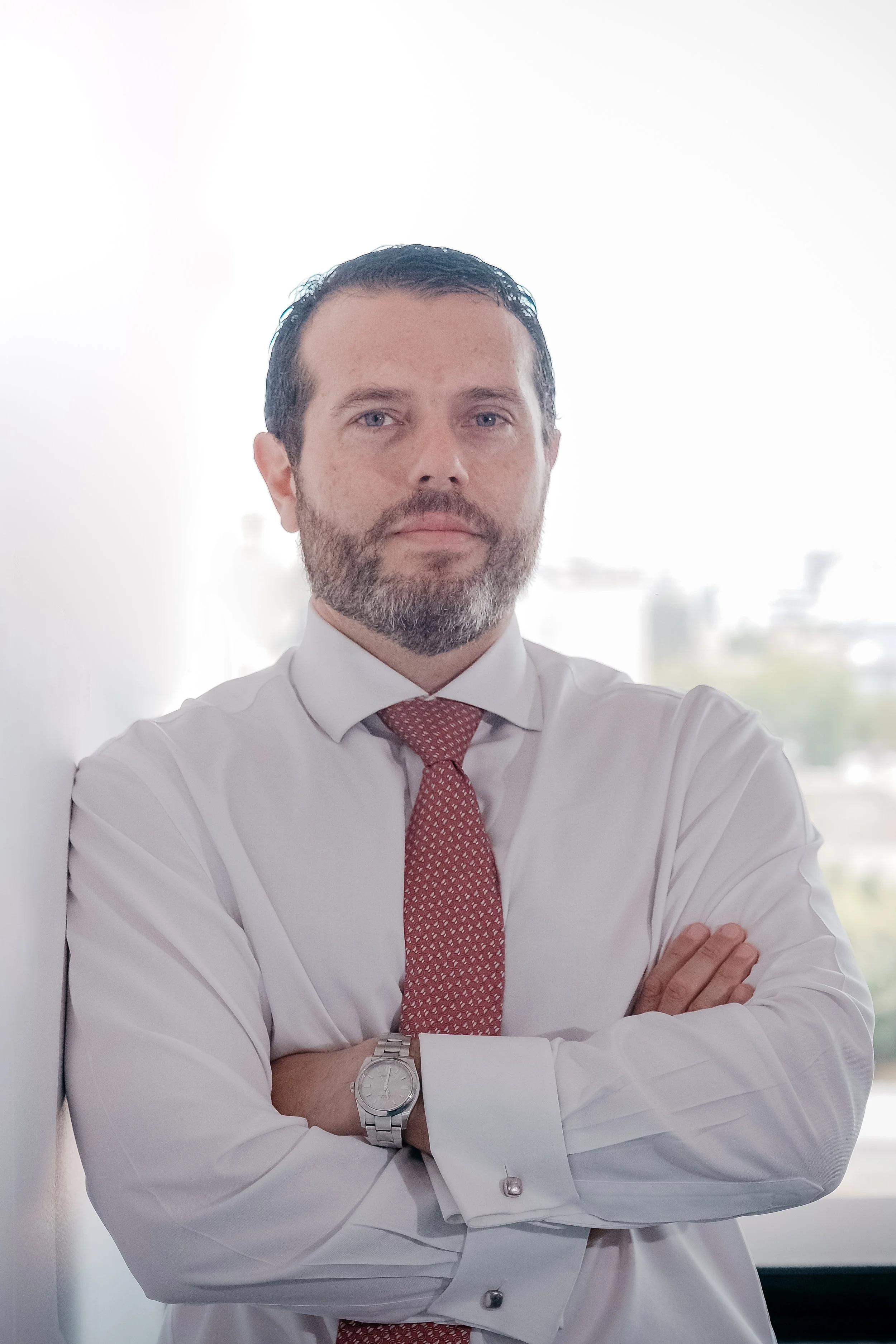
Diego Marrero joined AFP Habitat shortly after it moved into the Peruvian market in 2013 and left in 2025 to launch his own fund.
Rather than positioning Habitat close to its competitors, Marrero told AOX he built the portfolios around his view that “everything is macro” and that portfolios should be positioned “according to the economic cycle”.
This results in a significantly more active style of investing than is seen in many Latin American pension funds – or in many pension funds in general.
It involves making significant tactical moves and using the portfolio global exposure as a key source of differentiation.
The process also meant Marrero avoids looking at what other pension funds are doing. “I tried to think outside the box,” he said.
He described a “head effect” among Latin American pension funds, where managers can become too worried with competitor’s portfolios and tracking error. The result is that investors can make poor decisions not because they lack investment expertise, but because “they are looking to do much to the side”.
Marrero said that as a result Habitat’s four plans ranked first among their respective peers during his tenure. Over a roughly 10-year period, for example, he said Habitat’s Fund 3 returned about 125 per cent compared to roughly 60 per cent for rival funds.
The approach became particularly visible when markets collapsed in March 2020 at the start of the Covid-19 pandemic.
Marrero began pulling risk out of Habitat’s portfolios, selling cyclical stocks, sharply reducing international exposure and moving heavily into US dollar-denominated cash as he tried to protect the funds from the sell-off.
Then, within a week, he changed direction.
As economies began reopening, Marrero made what he described as a “drastic change” to the portfolio and took substantially more risk. He put significant exposure into China, semiconductors and technology while selling traditional retail, real estate and office funds as the pandemic accelerated the digitalisation of the economy.
Marrero said the positioning helped Habitat outperform its peer group by roughly 800 basis points in 2020.
Two years later, the macro picture changed again and so did the portfolio.
With inflation surging, interest rates rising and Russia invading Ukraine in 2022, Marrero sold cyclical exposure and concentrated more of the portfolio in energy, including oil and gas investments. He said those positions rose sharply as broader markets fell, helping protect the funds during a difficult year.
In 2023 he reversed course once more.
While recession warnings dominated the outlook for the US economy, Marrero did not believe the bearish case was correct. He increased US exposure and built large positions in semiconductors as the artificial intelligence investment cycle began gathering momentum.
At Habitat, international investing became one of Marrero's main tools for breaking from the pattern.
During his tenure, he estimates he interviewed more than 1,000 international asset managers, travelling to New York, London, Frankfurt and Paris in search of strategies across markets and asset classes.
His manager selection process focused heavily on consistency and cost.
“In investments, the only thing guaranteed is the fee,” Marrero said.” The future return is an expectation.”
But he does not believe active management warrants those fees everywhere.
“Where I think active managers add the most value right now is fixed income,” he said, arguing that the asset class is a less efficient market where managers have more room to uncover opportunities.
Latin American corporate credit is one example. Marrero said the asset class requires managers that can analyse individual issuers and credits in detail rather than simply replicate an index.
“For markets where you need a specialist, that’s where you look for active management,” he said.
The calculation is different in efficient and liquid markets such as US large-cap equities, where active funds are often expensive and few managers have demonstrated consistent outperformance, while passive exposure is cheap and highly liquid.
Marrero is critical of treating a traditional 60/40 portfolio as something investors should maintain regardless of economic environment.
“There are moments when it doesn’t make sense to be invested in fixed income, " he said. “You’re only gonna lose money being invested in fixed income”
Eventually Marrero decided he had reached the limit of where that investment career could take him inside of Habitat and he was succeeded by his deputy.
He launched the Blum Dynamic Macro fund in 2025, applying a version of the top-down international strategy he used at Habitat. The fund now manages about $110mn and starts from a 60 per cent equity, 40 per cent fixed income structure, but Marrero stressed that the allocation is not fixed
“The 60/40 can move to 80/20 or 0/100,” he said. “I try to position the portfolio according to the economic cycle.
“The team [at Habitat] continued with the strategy that I built, and after my departure, the team remained in place. The person who replaced me as CIO was my number two. That is why they have continued to lead in returns after my departure.”