
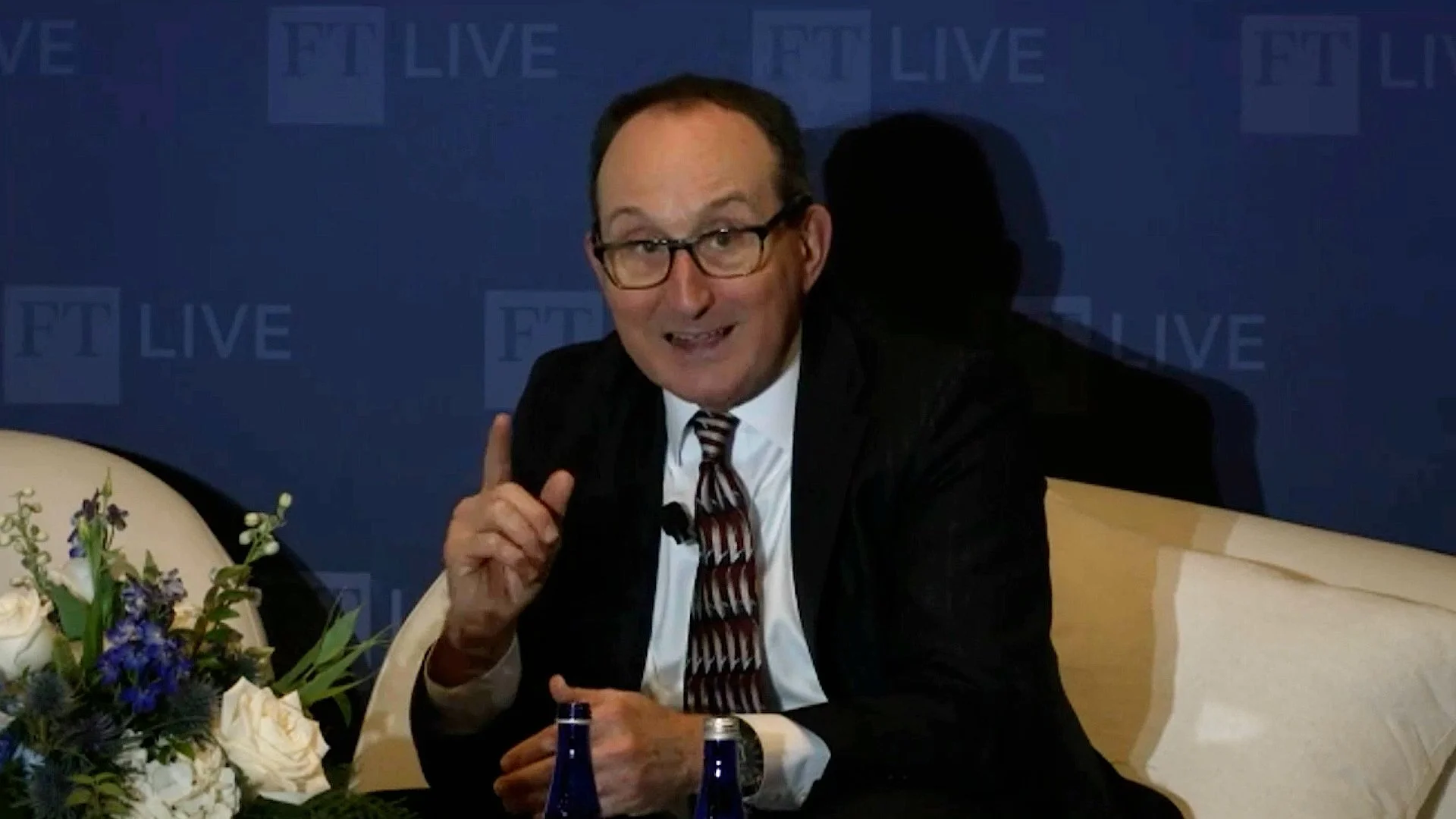
Monte Tarbox, the chief investment officer at the New York City comptroller’s Bureau of Asset Management, said his confidence in FTSE Russell was “seriously undermined” by its decision to fast-track SpaceX onto its indices after its IPO and that he will watch closely to see how the Anthropic and OpenAI listings are handled
Good morning. Two weeks ago I was in New York for our asset owners’ roundtable event, which provided plenty of food for thought (let me know if you’d be interested in attending a future roundtable in any part of the world).
While there I used the opportunity to catch up with several people including my in-laws and, crucially for the purpose of this newsletter, the chief investment officer at the New York City comptroller’s Bureau of Asset Management, Monte Tarbox.
You’ll recall New York City was one of the US pension systems to write a stern letter to FTSE Russell over its decision to fast-track SpaceX into its indices.
Tarbox, who runs around $326bn including around $120bn in passive investments and $15bn in funds that track a FTSE Russell index, remains unhappy with FTSE Russell’s decision and he had a warning for the company in respect of the looming IPOs of Anthropic and OpenAI: if he is unhappy with the way they handle these listings he will consider moving money away from their indices.
He said: “To date we’ve assumed index providers operate with a lot of integrity, but that was seriously undermined by the way in which they kind of bent over backwards to help the SpaceX listing in a way that I don’t think was necessarily in the best interest of the institutional investing community that relies so heavily on the indices.
“We hold the indices in high regard because of the consistency, discipline of their construction, and the long-term data set series they’ve created. Those are invaluable to us as investors and it breaks my heart in one sense to see them relax that discipline in the help of companies that, it’s not clear to me, have any long-term allegiance to these indices anyway, they’re very transactional about it.
“There’s half a dozen big hyperscalers that could come, like Anthropic. We’re going to have to see how the exchanges and the index providers treat them but if it continues in the way that it did with SpaceX then we have to give very serious consideration to the question of whether it will play a role in our decisions on which index we use. I can’t forecast where we’ll come down but reliance was never a question up to this point.”
A spokesperson for FTSE Russell said it would be inappropriate to comment on the issues Tarbox raised since it does not make correspondence between itself and its stakeholders public.
New York City comptroller Mark Levine has written to Anthropic’s chief executive, Dario Amodei, expressing concern about the proposed governance structure the company may adopt following its IPO, which would give founders and trustees concentrated control of the company.
As it happens I recently spoke to Calpers investment director Drew Hambley about this issue and it’s fair to say he was more sceptical about whether investors could do much about index providers.
He said: “I would say at a high level there’s a lot of infrastructure behind working with a benchmark provider.
“It is certainly something the team reviews but it is not easy to jump from one to the other without a lot of operational lift.”
Tarbox also discussed the issue of New York City’s relationship with BlackRock.
Last year Levine’s predecessor as comptroller Brad Lander, who did not run for re-election and is currently running for US Congress, recommended some of New York’s biggest pension funds drop BlackRock because it had failed to “address climate risk with the seriousness we expect”.
Tarbox was more phlegmatic on the issue, saying the contracts had been put out to tender and BlackRock was welcome to bid on them with the process due to be completed by the end of the year.
He said: “We continue to be a big BlackRock client and they are our largest single investment manager today.
“We were disappointed by some of the pronouncements BlackRock made about its commitment to using shareholder rights and corporate governance as a means of advancing concerns about climate change.
“I know the previous administration made some comments and suggested divestment might be on the horizon but this administration is absolutely committed to not making a decision of that consequence on political grounds but rather on financial merits.
“What the Levine administration decided to do is something that’s just good housekeeping, something we probably should have done anyway, which is to put any vendor out to bid every once in a while.
“BlackRock is absolutely a contender, they haven’t been eliminated, they haven’t been black balled. It’s not appropriate for me to get into any more details than that.”
