
Why Italy’s banking charities have spotted an opportunity in Europe
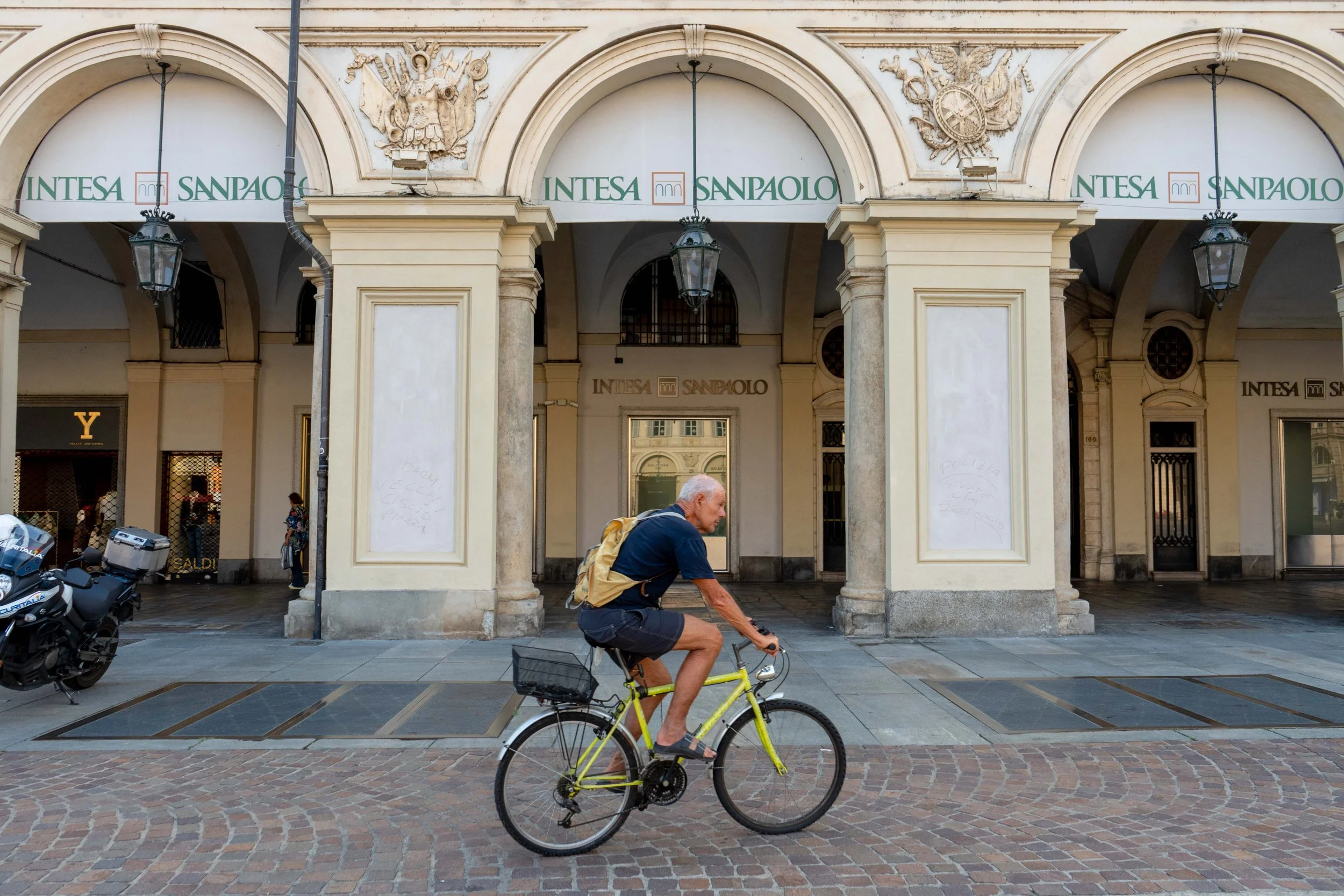
The regional foundations which were born from Italy’s banking reforms in the 1990s think changes to the way the European Union funds projects around the bloc have offered up an investment and a grant-making opportunity (Francesca Volpi/Bloomberg)
In the European Union things tend to take time and budgets are a good example of that, with work on the 2028-34 financial plan already underway.
As part of this process, the European Commission is proposing to reduce the 52 existing funding programmes and instruments to 16 in a move which regional authorities have warned could concentrate greater control in the national capitals.
But a fragmented public system such as Italy’s, where administrative delays have made it notoriously difficult to access funds, foundations such as the $14.6bn Cariplo and $14.6bn Compagnia di San Paolo, which are the biggest in Italy are spotting an opportunity to step into the gap.
There are more than 8,000 foundations in Italy. Many of the largest of these have their roots in the banking sector, having been established after the banking groups separated their philanthropic activities from their day-to-day banking operations in the 1990s as part of widespread privatisation and consolidation as Italy’s banking system moved from a highly regional one to a national one.
For this reason, the foundations which remain have inherited a tangible connection with specific towns and regions and are well acquainted with their regional characteristics through links that date back as far as centuries ago.
Data from ACRI, which represents banking foundations and savings institutions in Italy, estimate that as of 2024 these types of foundations manage assets totalling around $60bn.
So how exactly do foundations see closer collaboration with Europe working? Giovanni Azzone, Cariplo’s president, believes the peculiar characteristics of Italian foundations – for example their very localised natures – enable them to work “with two hands” through both investment and grant-making.
These foundations already facilitate the implementation of EU programmes in their region by borrowing money, co-financing and entering local partnerships to help their communities and smaller organisations which are unable to engage directly at the European level, so that they can secure funding from EU projects.
But they are now increasingly seeking to invest money from their own portfolios directly into European initiatives that contribute to the growth of Italian start-ups and the social economy.
Indeed Cariplo and San Paolo say they have already begun. Together with Italy’s biggest bank Intesa San Paolo - of which both foundations are major shareholders due to the fact it bought up the banks to which they trace their origins - the foundations are taking a seat at the investment table and recently joined the new EU investment vehicle ScaleUp Europe.
With a target of $5.6bn, the vehicle invests in Europe’s most promising tech companies. It is the first time that the EU approached foundations to be founding investors in market-based instruments and look for private partnerships.
The foundations are expecting the new budget to include more initiatives like the ScaleUp fund.
“In my view, this represents a step change,” Alberto Anfossi, general secretary of Fondazione Compagnia di San Paolo said.
He stresses that, while foundations cannot fund major infrastructure of public systems on their own, projects such as ScaleUp fund, in which the Commission agrees to commit its own resources to a privately managed vehicle, enable them to catalyse investment, helping to ensure that European resources are used effectively. “The Scale Up Fund’s fundraising target of $5.6bn is a substantial figure, but it remains within the reach of European foundations as a whole, working alongside the public sector,” Anfossi says.
He said channelling multiple priorities through a more visible national framework could make EU funding more tangible to citizens.
Azzone tells AOX: “For Italian foundations, it’s a two-fold task,” he says. “The first is to help translate European policies into concrete initiatives capable of making a real difference at a local level. The second is to raise communities’ awareness of the opportunities that Europe offers.”
“This Europe that we all talk about, which seems so distant, is, in reality, a Europe that plays a vital role in our regions, providing extremely significant resources. However, it is essential that people, institutions, third-sector organisations and communities are aware of these opportunities and can, in some way, feel part of these communities that experience the value of Europe in a positive light,” he adds.
Working together for one mission
This new approach represents opportunities for foundations but also risks, says Azzone.
“The potential lies in our ability to provide capital on different terms from other investors. Foundations can take a more patient approach to capital, with longer investment horizons and financial returns that are reasonable but below market rates.”
On the other hand, mixing profit-seeing entities with benevolent investors comes with its own risks.
“What matters most, in my view, is complete transparency around these programmes. It needs to be clear what interests are involved, what each party is trying to achieve and what returns each expects — or is guaranteed — from the investment,” says Anfossi.
He mentions areas such as housing and urban regeneration, underlining the structure is transparent and open for everyone to see, then it is something that can be publicly defended. Azzione said Cariplo enters into these partnerships knowing that private-sector investors have interests of their own.
“Without that transparency, there is a real risk that the public will misunderstand whose interests are at stake and what each party stands to gain.”
A regional team
But it is not just on the funding side that foundations are seeking influence. Foundations are also claiming they will be essential for helping local organisations gain access to EU programmes on the grant side.
“Many of the smaller organisations are still at a very early stage in terms of their management capabilities, they struggle not only to access European funding, but even national or regional funding. So we need to take this reality into account,” says Azzone.
Italy has historically struggled to absorb EU cohesion funding. A European Parliament study put its absorption rate for 2014–20 cohesion-policy funds at 77.9 per cent at the end of 2023. The EU average, for context, is 90.4 per cent.
“How could we help? By having a pivotal role in developing proposals,” Azzone says.
Alongside networks like ACRI, the Association of Foundations and Savings Banks and Assifero, the Italian Association of Foundations and Philanthropic Organisations, foundations are creating pathways for the third sector and regional bodies to tap into the EU funding.
Making the most out of programmes
These foundations normally spend their money on social, cultural and environmental projects, and currently investment across the EU is prioritising defence given the turbulent state of geopolitics at the moment.
But the foundations don’t see this as a problem.
“I see very strong potential synergies with areas such as social issues and culture, which help generate competitiveness in our regions. Just think of the historic villages and cultural heritage of a country like Italy: they are part of humanity’s heritage, but also an important source of competitiveness,” Azzone responds. The foundation has developed specific programmes such as InnovaCultura, which focuses on developing innovative technological solutions to support access to enhancement and preservation of cultural heritage.
“I’m against a culture of complaining,” Azzone says. “In a context like this, I believe the first task of an institution such as Cariplo is to understand how we can use these circumstances to pursue the goals that matter to us and make our community more resilient,” he adds.
Compagnia di San Paolo has created, as part of this strategic plan, a dedicated learning department partially focused on impact evaluation.
“And this is done rigorously. I think that at the moment we have around 200 project evaluations under way at the same time, also commissioned from various external organisations.”
But he emphasises that the true yardstick for measuring impact is the public: the EU must focus on funding projects that the public genuinely perceive as bringing them a benefit.
“Otherwise we risk ending up with the classic situation, right? The operation was a complete success, but the patient died,” he concludes.